
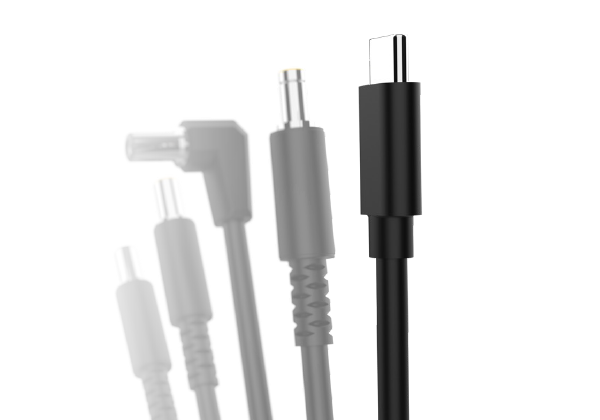
USB-C Power Delivery (PD) will become the standard for CPE equipment from the 14th December 2028. For operators and equipment manufacturers, this will have a direct impact on device stability, network performance, energy efficiency, regulatory compliance, and long-term reliability.
With the introduction of the 2025/2052 regulations, we asked a simple question: what really separates a standard branded USB-C charger from a purpose-built CPE charger? The answers were far more significant than we expected.
NetBit recently benchmarked its 45W USB-C PD power supply against a branded USB-C PD charger across a series of compliance, efficiency, network performance and thermal tests. The comparison was based on benchmark testing between a NetBit CPE grade power supply and a USB-C C charger under the same test conditions. The results demonstrated measurable advantages for the NetBit power supply in several key areas.
Stronger Compliance Confidence
Compliance performance is non-negotiable for any power supply used in CPE and connected equipment. During conducted emissions testing, the NetBit power supply achieved compliance with margin, while the branded USB-C PD supply failed to meet the applicable regulatory requirements.
In addition, the NetBit supply met the specified ripple and noise requirements, whereas the branded USB-C PD supply exceeded the standard CPE requirement.
For manufacturers and operators, these results are significant because conducted emissions, ripple, and noise can all affect system stability, regulatory certification, and long-term product performance. A power supply that performs with compliance margin reduces validation risk and can be confidently deployed at scale.
Higher Efficiency Across Operating Conditions
All power supplies placed on the EU market must comply with the Code of Conduct (CoC) efficiency requirements. Across all tested operating conditions, the NetBit power supply delivered an average efficiency improvement of approximately 3%. Under light-load conditions the advantage increased to 8.5%.
This level of efficiency improvement can have a meaningful impact on whether a CPE device meets. In large-scale deployments, even small improvements at the individual device level can translate into substantial reductions in downstream Scope 3 CO₂ emissions when multiplied across hundreds of thousands or millions of deployed units.
Improved Network Performance Under Challenging Line Conditions
Power supply performance can directly influence network stability. During power line transmission testing, the NetBit power supply consistently outperformed at higher attenuation.
This is particularly relevant in real-world deployments, where network conditions are not always ideal. Equipment must continue to perform reliably as line conditions deteriorate. NetBit’s ability to maintain throughput at 16 dB attenuation demonstrates stronger support for reliable data transmission under more demanding operating conditions.
Better Thermal Performance at Elevated Ambient Temperatures
Thermal performance was another area where the NetBit power supply demonstrated a measurable advantage. When tested at an ambient temperature of 45°C, the NetBit supply exhibited a case temperature rise that was 17°C cooler than the branded USB-C PD supply.
CPE devices are often installed inside cabinets, behind furniture, alongside other electronics, or in warm customer environments. Lower operating temperatures can contribute to improved reliability, longer service life, and greater confidence across a wider range of installation conditions.
The Takeaway
CPE power supplies are not the same as consumer phone chargers.
Under the stated test conditions, the NetBit 45W USB-C PD power supply demonstrated measurable advantages in efficiency, conducted emissions, ripple and noise, thermal performance, and power line transmission.
For operators and equipment manufacturers, this matters. As USB-C PD becomes more widely adopted in CPE and connected-device applications, selecting a power supply should involve more than simply choosing the correct connector type. Performance, compliance margin, efficiency, thermal stability, and robustness all contribute to the reliability and long-term performance of the overall system.
The benchmark results demonstrate the value of selecting a USB-C PD power supply engineered specifically for the reliability and deployment demands of modern CPE applications.
For further details on this and any other aspect of the new USB-C 2025/2052 regulations, get in touch: sales@netbit.com